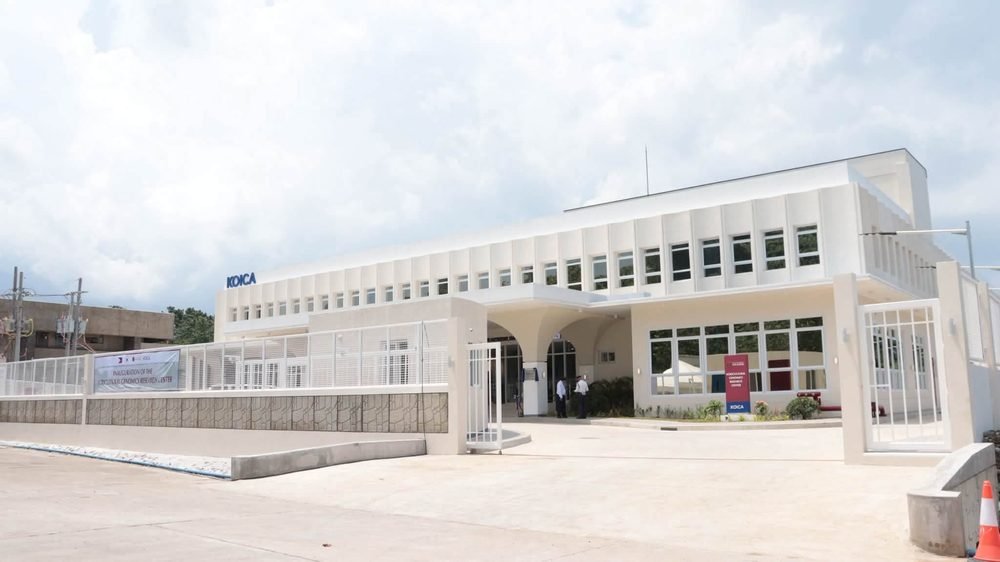
The University of the Philippines Los Baños (UPLB) has officially inaugurated the Philippines’ first Agricultural Genomics Research Center (AGRC), strengthening the country’s capacity for genome-based research aimed at addressing agricultural challenges and supporting long-term food security.
The two-story facility was inaugurated on September 21, 2026, with support from the Government of South Korea through the Korea International Cooperation Agency (KOICA), in partnership with UPLB and the International Rice Research Institute (IRRI).
The center was established under the KOICA-funded project, “Capacity-Building for Higher Education and the Establishment of Agricultural Genomics Research Center at the University of the Philippines Los Baños.”
Construction began in 2023 following the approval of a US$14.95-million KOICA grant for the project.
The facility will serve as a hub for agricultural omics research, supporting studies in genomics, transcriptomics, proteomics, and metabolomics.
According to UPLB, these technologies will allow researchers to examine agricultural systems at different levels, including genes and DNA, and generate scientific information that may help address challenges affecting agriculture and food production.
Building agricultural research capacity
Dr. Maria Genaleen Q. Diaz, program director of the Philippine Genome Center, said the UPLB-AGRC is expected to provide researchers, scientists, and faculty members with the facilities and capabilities needed to conduct genome-based studies that could contribute to improving agricultural productivity.
Diaz said discussions among UPLB, KOICA, and other partners began in 2019 to identify gaps and priority needs in agricultural genomics.
The initiative formally moved forward in 2022 with the First International Conference on Agricultural Genomics, followed by the construction of the research center in 2023.
The project goes beyond the construction of the physical facility.
It includes the procurement of advanced equipment for genomics and other omics technologies, development of a mid-term operational plan, training and scholarships, and collaborative research and knowledge exchange with academic institutions.
The program also provides opportunities for Filipino researchers to pursue advanced studies and specialized training.
“Currently, there are ten Filipino scholars taking their PhD degrees at top Korean universities while Koreans are also pursuing their masteral programs here,” Diaz said.
The project also includes MS scholarships in collaboration with IRRI, invitational training in bioinformatics and genomic techniques, internships, seminars, and other capacity-building activities.
The Department of Science and Technology (DOST), through the Philippine Council for Agriculture, Aquatic and Natural Resources Research and Development (PCAARRD), also provided additional support for research equipment, Diaz said.
From genes to food security
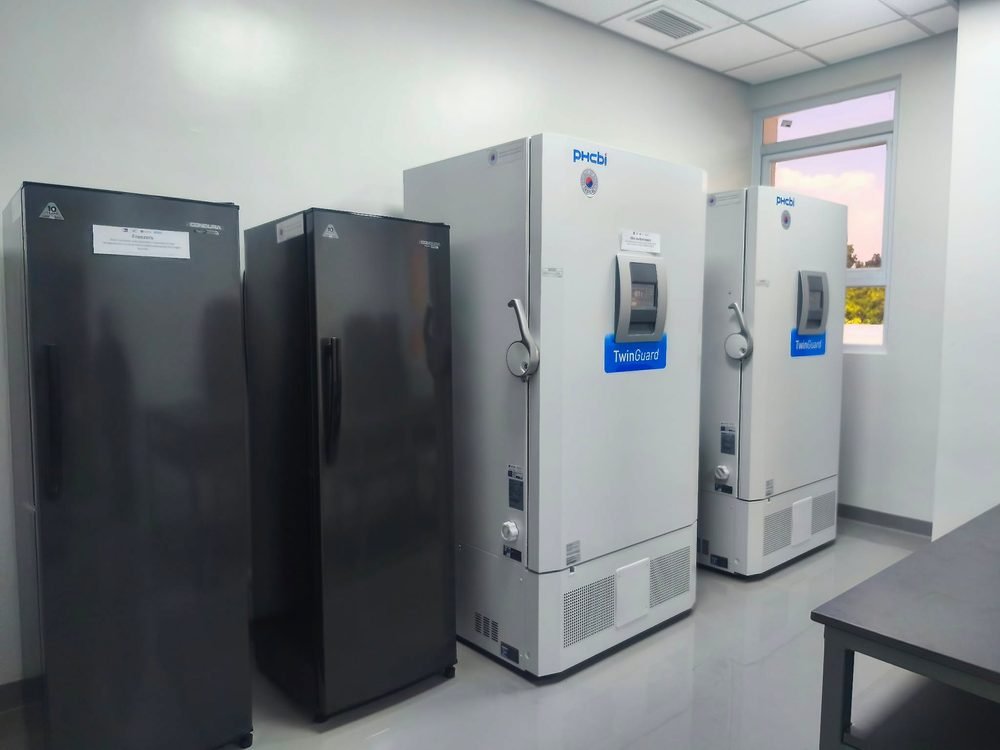
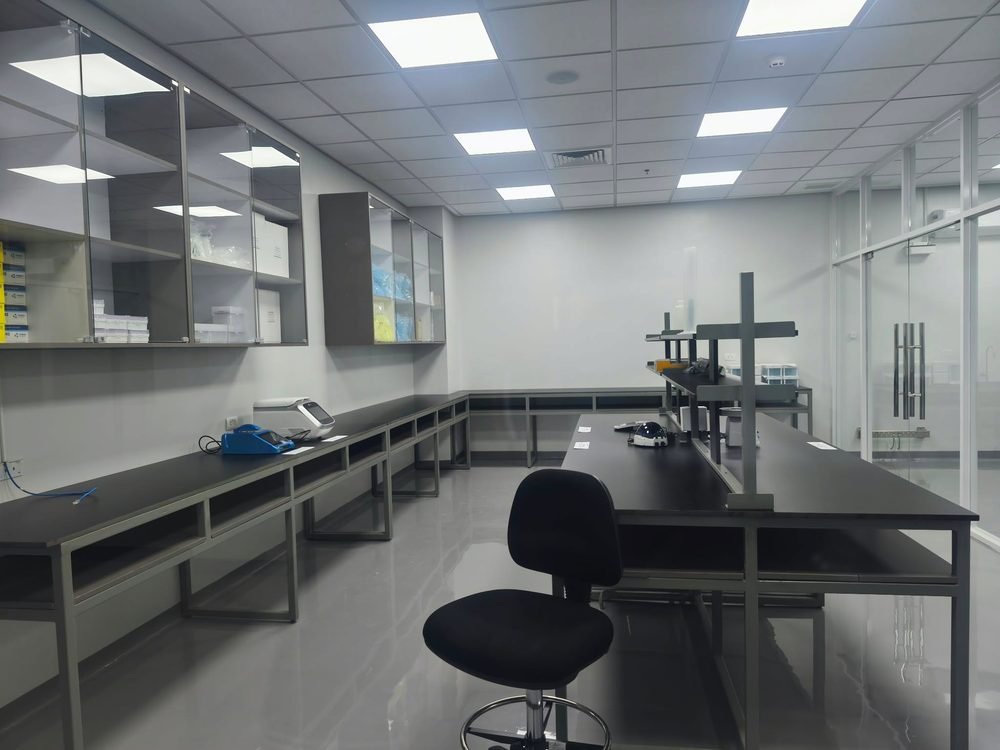
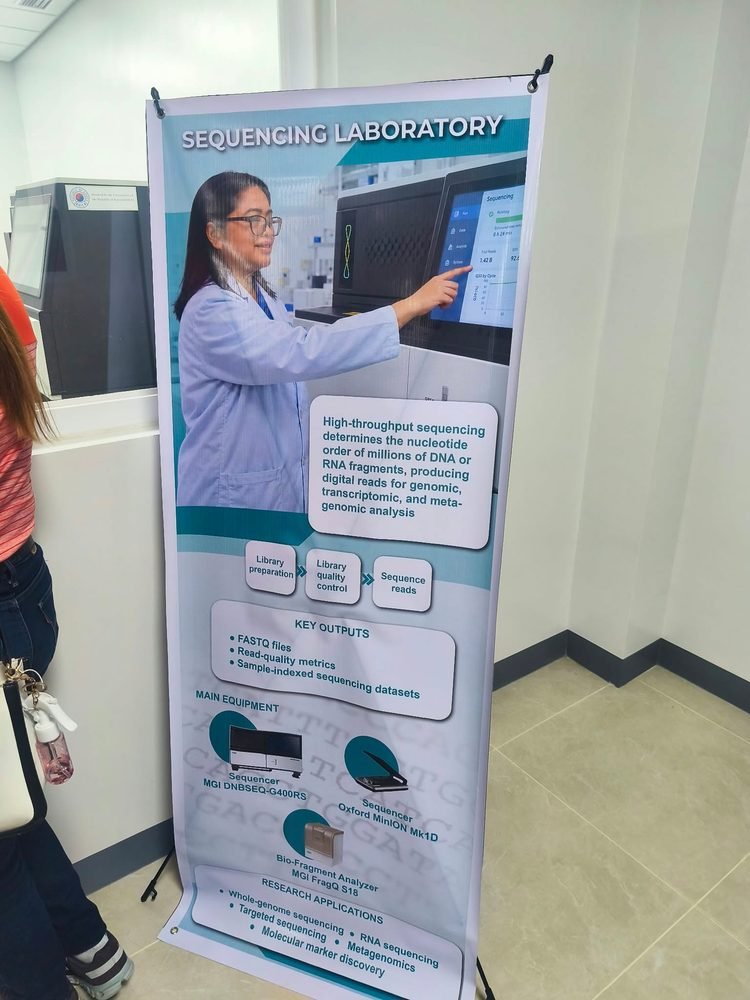
The center is equipped with modern laboratory facilities and specialized equipment for agricultural genomics and related fields.
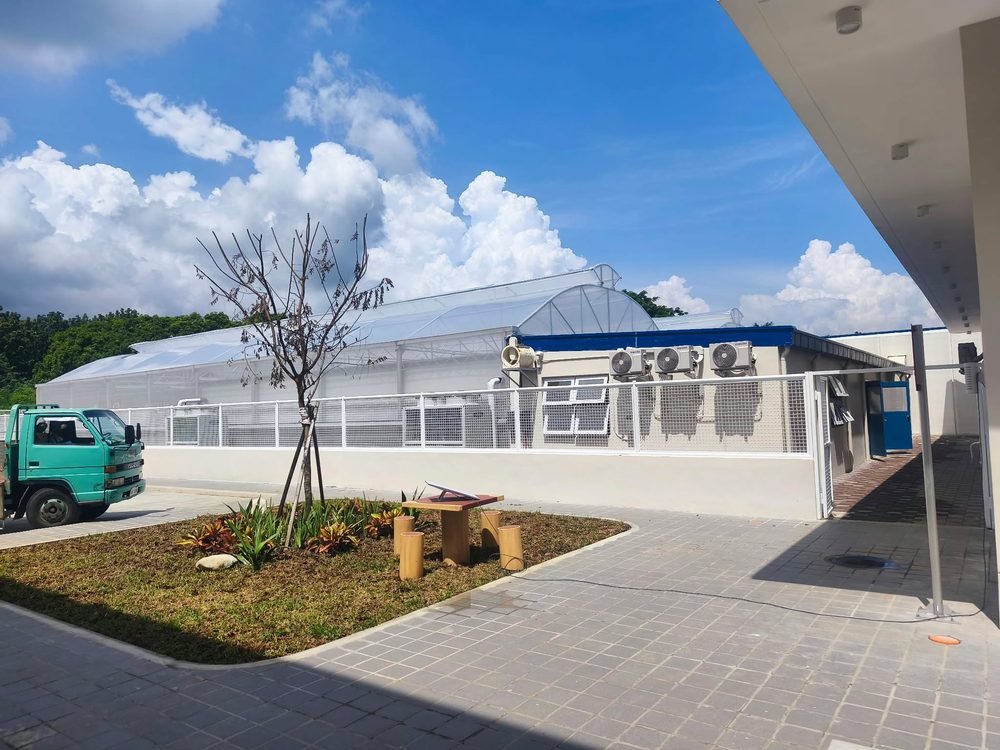
It also houses a tissue culture facility and two screenhouses intended to support micropropagation, a technique used for the rapid multiplication of plants.
Beyond increasing agricultural productivity, the research center is expected to contribute to biodiversity conservation and the development of science-based responses to emerging challenges in agriculture.
By strengthening research capabilities in genomics and other omics technologies, the facility could help scientists better understand crops, livestock, microorganisms, and other components of agricultural systems.
Such research can provide a scientific basis for developing improved agricultural technologies and approaches relevant to productivity, sustainability, and food security.
Strengthening scientific collaboration
Among those who attended the inauguration were Republic of Korea Ambassador to the Philippines Lee Dong-gy, KOICA Country Director Jung Youngsun, UPLB Chancellor Jose V. Camacho Jr., and Los Baños Mayor Neil Andrew Nocon.
Representatives from DOST-PCAARRD, the DOST Ecosystems Research and Development Bureau, the Commission on Higher Education (CHED), the Department of Economy, Planning, and Development, UPLB, and other government and partner institutions also attended the event.
The establishment of the AGRC further expands UPLB’s role as a center for agricultural science and innovation while strengthening cooperation between Philippine and Korean institutions.
For the Philippines, the significance of the facility extends beyond its laboratories and equipment.
Agricultural genomics brings together science, technology, data, and biological research in an effort to better understand the factors affecting agricultural production.
With researchers gaining access to advanced facilities, specialized training, and international research partnerships, the UPLB-AGRC is positioned to become an important platform for developing knowledge and technologies that can help address the country’s evolving agricultural challenges.
For Laguna, the center also adds another major research institution to a province already closely associated with agricultural education, research, and innovation.
As the country confronts changing agricultural conditions, biodiversity concerns, and the continuing need to strengthen food security, the work emerging from the UPLB Agricultural Genomics Research Center could help translate advanced genomic science into solutions that reach farms, communities, and the wider agricultural sector.

- UPLB opens Philippines’ first Agricultural Genomics Research Center in Laguna - September 26, 2026
- 5 year term ng Barangay, SK Officials, isinabatas na - September 26, 2026
- ‘CLONED’ STL MACHINES, ALLEGEDLY UNAUTHORIZED OPERATIONS IN QC DRAW CALL FOR PROBE - September 25, 2026