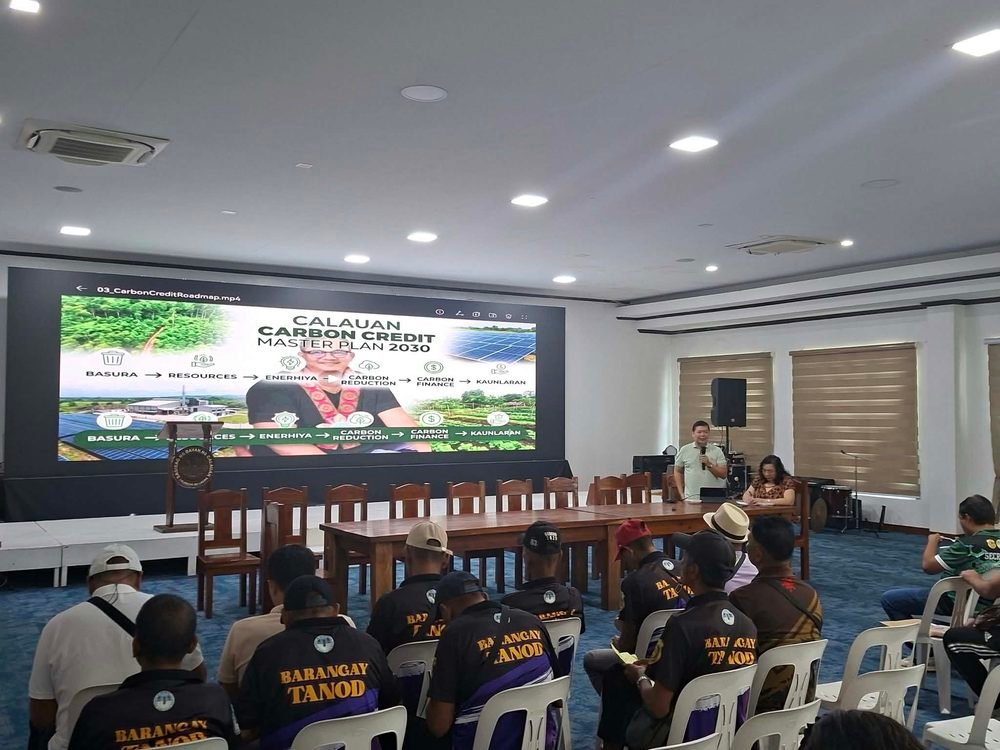
The local government of Calauan is pushing for the implementation of a carbon credit initiative aimed at protecting the environment while potentially opening opportunities for additional funding for environmental and community development projects.
Calauan Mayor Roseller “Osel” Caratihan said the local government has been working on the initiative for four months, including conducting public hearings and deliberations at the Sangguniang Bayan.
The proposed measure is now on its second reading, and the municipal council is expected to issue a corresponding resolution next week to advance the implementation of the carbon credit initiative in the municipality.
Calauan’s initiative comes as the national government moves to establish a clearer policy framework for the development of carbon markets in the Philippines.
On October 13, 2026, President Ferdinand Marcos Jr. signed Executive Order No. 127, directing the formulation of the Philippine Carbon Market Policy Framework, creating the Inter-Agency Committee on Carbon Markets, and designating the Department of Environment and Natural Resources (DENR) as the national authority for carbon markets in the country.
What is a carbon credit and how can it help?
A carbon credit represents one metric ton of carbon dioxide equivalent (CO₂e) that has been verified as reduced or removed from the atmosphere through a qualified project.
In a carbon market, carbon credits may be sold or traded to companies seeking to support or account for greenhouse gas emission reductions, subject to applicable standards and verification requirements.
Projects that protect and restore forests, plant and maintain trees, improve waste management, or adopt technologies that reduce emissions may generate carbon credits, provided their environmental impact is properly measured, monitored, and verified.
For local governments such as Calauan, this mechanism could provide an opportunity to attract additional funding for environmental programs. However, the potential benefits will depend on the type of project, compliance with applicable standards, verification of results, and the availability of buyers for the credits.
Potential benefits for residents
Beyond contributing to efforts to address climate change, the carbon credit initiative could create opportunities for projects that directly benefit local communities.
These may include restoring green spaces, protecting natural resources, improving waste management, and generating livelihood opportunities for residents participating in environmental programs.
Ensuring transparency in the management of potential carbon credit revenues will also be essential. The local government would need to establish how the proceeds will be managed, who will benefit, and how the rights and livelihoods of residents affected by the projects will be protected.
The national policy framework envisioned under EO No. 127 is expected to help establish guidelines for project selection, monitoring, reporting, and the equitable sharing of benefits.
In Calauan, attention is now focused on the Sangguniang Bayan’s next steps regarding the proposed resolution, which could pave the way for the initiative’s next phase.
If properly implemented, the carbon credit initiative could become part of the municipality’s broader efforts to protect the environment while exploring innovative ways to support community needs and sustainable development.



- NLEX-C5 Northlink section 96% complete; faster trips to Quezon City expected - October 16, 2026
- Mekeni takes Filipino flavor beyond borders, connects OFWs to home in Taiwan - October 16, 2026
- EO 127 ON CARBON MARKET COINCIDES WITH CALAUAN’S PUSH FOR CARBON CREDIT INITIATIVE - October 16, 2026