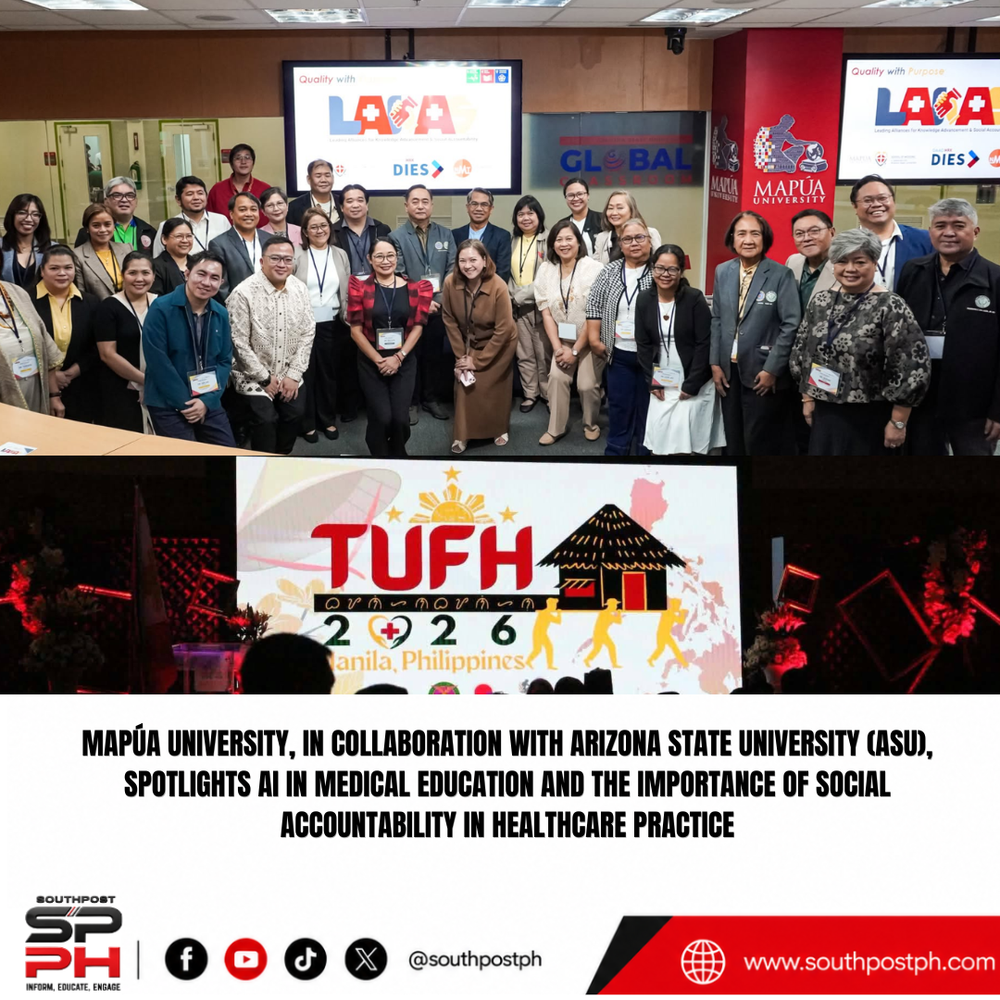
Mapúa University, in collaboration with Arizona State University (ASU), spotlights AI in medical education and the importance of social accountability in healthcare practice at the recent Towards Unity for Health (TUFH) 2026 International Conference held in Manila, Philippines.
The discussions on advancing Generative AI in medical education highlighted active, personalized learning that elevated student engagement while social accountability showcased collaboration with IPs (indigenous peoples) to integrate medical training with cultural sensitivity.
Both efforts are seen to strengthen inclusivity in medical education and positively impact the future of healthcare practice. TUFH 2026 gathered global academic and healthcare professionals, policymakers, researchers, students, and community leaders under the theme “Bayanihan for Health Equity: Co-Creating Social Innovations for Responsive and Resilient Health Systems.” As the organizing conference partner, Mapúa University showcased innovations and hosted cultural night for the TUFH delegates.
𝗜𝗻𝘁𝗲𝗴𝗿𝗮𝘁𝗶𝗻𝗴 𝗔𝗜 𝗶𝗻 𝗠𝗲𝗱𝗶𝗰𝗮𝗹 𝗘𝗱𝘂𝗰𝗮𝘁𝗶𝗼𝗻
Amid shifts from traditional learning, Mapúa University School of Medicine is leading the way to AI-empowered healthcare education in the Philippines. Under the leadership of Dr. Malaya P. Santos, Dean of Mapúa University School of Medicine, the team presented its innovative integration of Generative AI and MapúaMedX initiatives at TUFH 2026.
Mapúa showcased how it embedded AI in its academic settings with both faculty and incoming students required to undergo a mandatory 10-hour, self-paced prompt engineering course
developed by ASU even before classes start. The move ensures that learners and educators enter classes already equipped with basic knowledge to use AI effectively and responsibly.
With the use of AI, Mapúa also observed its impact in revolutionizing education through course design and active, personalized learning. It transformed instruction as AI tools assist in course redesign, lessening instructional material creation time while it enhances personalized learning for various types of learners.
AI benefits medical students as lectures can now be replaced with
dynamic, active learning experiences. One example is utilizing AI to simulate realistic patient profiles that allow students to practice clinical diagnostic dialogues to make learning interactive.
Mapúa presented examples of using AI to foster inclusive, innovative, and gamified learning such as “Discovery in the Dark,” a sensory activity co-designed with a visually impaired patient so that medical students would understand it and cultivate empathy. AI was also used to design escape room simulations to learn more about infectious disease outbreaks. By creating study
materials catered to visual, auditory or textual learning, AI promotes access and personalized learning.
TUFH also highlighted MapúaMedX, a digital-ready and modern healthcare initiative, which leveraged AI as a collaborative tool to address inequities in medical education and healthcare
delivery. “It first addresses inequity in capacity since there is incapacity in faculty and the huge number of students. Second is inequities in terms of resource ability—we make sure that everyone is aware of what free AI tools they can use. This also addresses inequity in financial availability. Lastly, awareness of ethical use of AI and it’s still an ongoing conversation,” Dean Santos explained.
At the TUFH 2026, Mapúa University is setting a benchmark on how AI-enabled learning and human empathy can work together for inclusivity.

𝗣𝗛’𝘀 𝗳𝗶𝗿𝘀𝘁 𝗻𝗮𝘁𝗶𝗼𝗻𝗮𝗹 𝗰𝗼𝗺𝗺𝘂𝗻𝗶𝘁𝘆 𝗶𝗻 𝗺𝗲𝗱𝗶𝗰𝗶𝗻𝗲 𝗳𝗼𝗿 𝘀𝗼𝗰𝗶𝗮𝗹 𝗮𝗰𝗰𝗼𝘂𝗻𝘁𝗮𝗯𝗶𝗹𝗶𝘁𝘆
TUFH sparked discussions on social accountability as Mapúa University spearheads LAKAS (Leading Alliances for Knowledge Advancement and Social Accountability), the first national
community of practice integrating social community, quality assurance, mentoring and ISAT 2.0- guided institutional self-assessment.
With Mapúa School of Medicine as the lead convenor, LAKAS unites 12 medical school across the Philippines including Ateneo de Zamboanga University, Pamantasan ng Lungsod ng Maynila, Cebu Normal University, Mariano Marcos State University, San Beda University, Batangas State University, Bukidnon State University, Isabela State University, Caraga State University, San Beda College Alabang, University of Southeastern Philippines, and University of
Southern Mindanao.
Participating schools went through intensive workshops to formally integrate social accountability into their core curricula. Among the notable innovation outcomes presented at TUFH include Bukidnon State University’s partnership with indigenous tribal leaders to create culturally sensitive medical training and Cebu Normal University’s graduate tracking system as it is important for medical schools to know the eventual practice of an alumnus.
LAKAS, funded by Germany’s DAAD (German Academic Exchange Service) under the DIES- NFP (Dialogue on Innovative Higher Education Strategies-National Multiplication Training) program, is seen to represent a landmark shift in how Philippine medical education and institutions prepare future healthcare practitioners to serve the country’s most urgent health issues.
According to Dr. Jake Cortez, this is especially relevant to the Philippines as it faces healthcare disparities in various regions.
“Social accountability calls for aligning education, research, and healthcare service delivery towards the health needs of the people that we are serving. That’s a very important shift in the approach to medical education,” Dr. Cortez began, saying that people would usually define a good doctor by being excellent. “There’s already a call with the Universal Healthcare Act for medical institutions to reorient medical education curriculum towards social accountability. It’s good on paper but there seems to be a policy-practice gap so we’re focusing on that,” he said, emphasizing that while clinical competence is vital, true excellence lies in serving where help is needed the most.
LAKAS is expected to encourage medical students and graduates to champion grassroots healthcare and target health issues that matter most to Filipinos such as hypertension, stroke, and cardiovascular disease especially across underserved provinces.
Dean Santos highlighted the significance of TUFH and Mapúa's role as an organizing partner along with The Network: Towards Unity for Health (TUFH) and the University of the Philippines Manila.
“Mapúa University is fully committed to fostering an intersectoral, international, and intergenerational environment for knowledge sharing. We are eager to join hands with other academic organizations and health providers, alongside the entire TUFH network, as we work toward our common goal of expanding access to health care where the need is greatest and improving health outcomes, particularly for underserved communities,” Dean Santos concluded.

- Isang Plato, Isang Pangarap: Kuwento ng Tagumpay ni Gemma Sanchez - October 8, 2026
- 𝗣𝗡𝗣 𝗥𝗲𝘀𝗽𝗼𝗻𝘀𝗲 𝗖𝗮𝗽𝗮𝗯𝗶𝗹𝗶𝘁𝘆 𝗣𝗶𝗻𝗮𝗹𝗮𝗸𝗮𝘀 𝘀𝗮 𝗖𝗔𝗟𝗔𝗕𝗔𝗥𝗭𝗢𝗡; 𝟭𝟯𝟬 𝗠𝗼𝘁𝗼𝗿𝗰𝘆𝗰𝗹𝗲𝘀 𝗜𝗽𝗶𝗻𝗮𝗺𝗮𝗵𝗮𝗴𝗶 - October 8, 2026
- CAISS to keep traveler data within Philippines, Securiport assures - October 5, 2026