The Mapúa Education Group’s expanded alliance with Arizona State University (ASU) marks more than a continuation of collaboration—it signals a structural shift in how Philippine universities engage with the global academic community.
What began as a focused partnership in business and health sciences has evolved into a comprehensive academic integration covering all undergraduate and graduate programs across the Mapúa system: Mapúa University, Mapúa Malayan College Laguna, Mapúa Malayan College Mindanao, and Mapúa Malayan Digital College.
At its core, the partnership is designed to embed globally benchmarked standards directly into the student experience in the Philippines. Rather than relying solely on exchange programs or limited articulation agreements, the collaboration integrates ASU’s academic content, innovation frameworks, and digital learning systems into Mapúa’s curricula. This approach strengthens rigor across disciplines while aligning programs with rapidly evolving global industries.
ASU—ranked No. 1 in the United States for innovation for 11 consecutive years by U.S. News & World Report and consistently recognized for global impact and sustainability—brings to the alliance a model built on accessibility, interdisciplinary discovery, and public value research. Mapúa, for its part, stands among the top 6% of universities worldwide according to Times Higher Education and remains one of the Philippines’ leading institutions in engineering, technology, and applied sciences.
Together, the institutions are crafting a fully integrated academic pathway. Students across the Mapúa Education Group will gain structured access to international learning experiences, including dual-degree options, accelerated master’s pathways, and mobility opportunities through ASU and its expanding ASU-Cintana Alliance network of global universities. These pathways are designed to expand global exposure without sacrificing affordability or local accessibility.
A defining feature of the partnership is the deep integration of innovation and artificial intelligence across curricula. Drawing from ASU’s AI-driven teaching frameworks and digital transformation initiatives, Mapúa is enhancing its pedagogy to prepare students for industries shaped by automation, sustainability, and emerging technologies. The collaboration extends beyond classroom instruction to include joint research initiatives, faculty exchanges, and industry-aligned innovation projects.
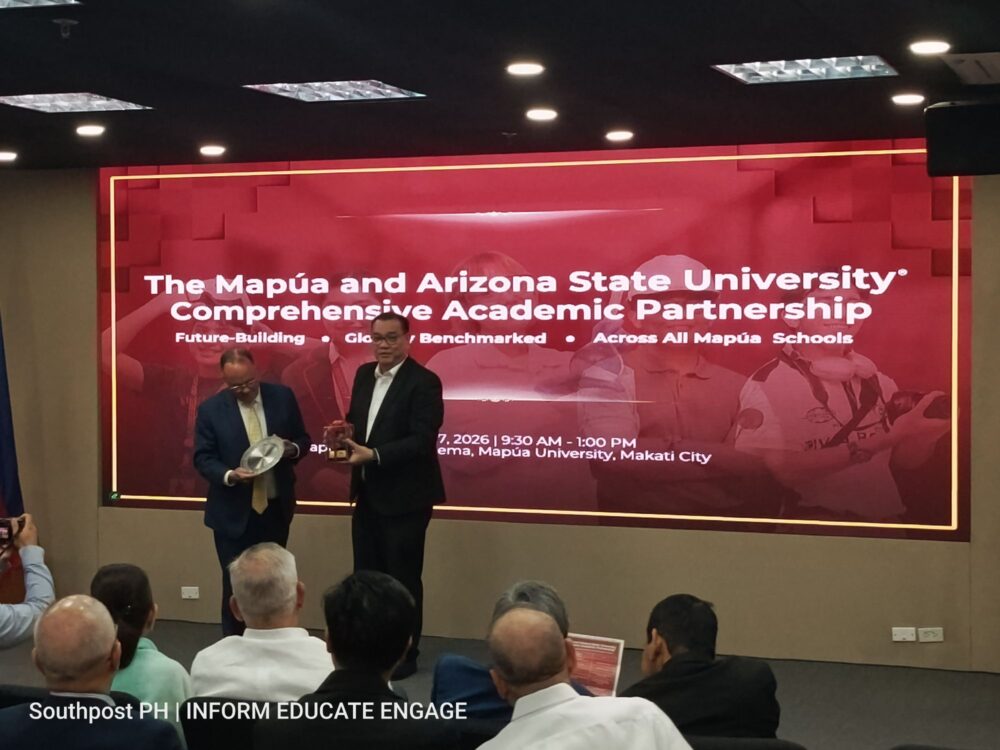
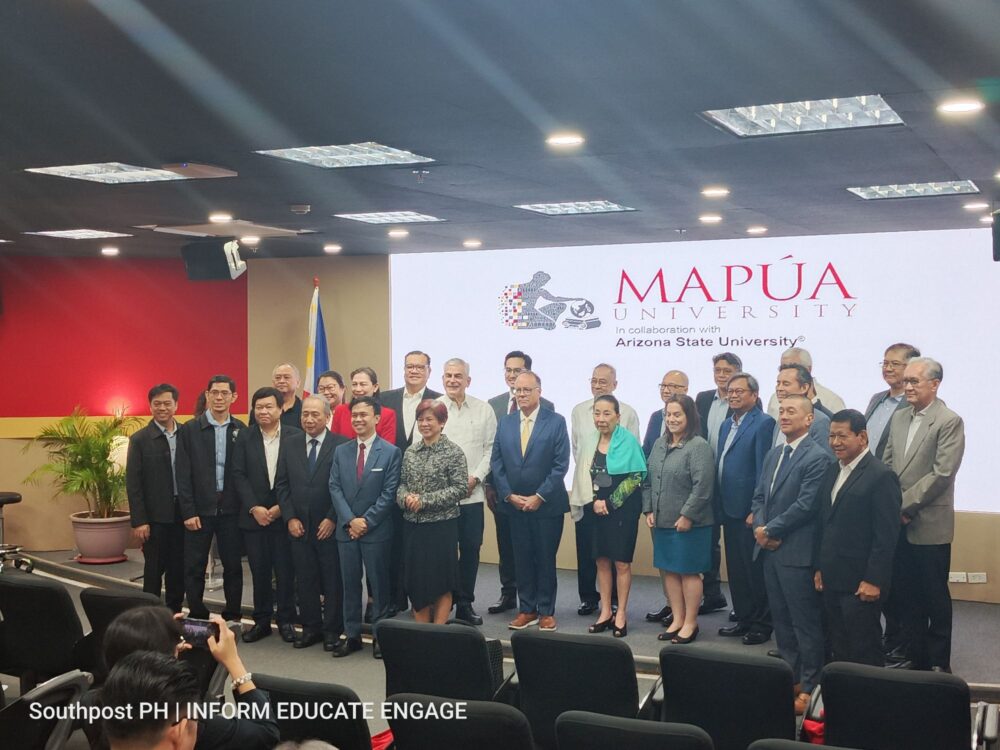
Long-term impact initiatives further reflect the breadth of the alliance. Plans for a Green College—benchmarked against ASU’s sustainability programs—underscore a shared commitment to climate action and future-focused research. Expanded research collaboration and knowledge exchange are also expected to strengthen contributions to national development while positioning Filipino scholars within broader international networks.
Leaders from both institutions frame the partnership as a strategic alignment of vision. Dr. Dodjie Maestrecampo, President of Mapúa University, emphasized that the integration of global expertise and digital innovation across campuses aims to equip Filipino learners to compete and lead internationally. ASU President Michael M. Crow described Mapúa’s transition to comprehensive partner status as a milestone, noting the opportunity to support institutional aspirations and broader regional development.
Beyond institutional prestige, the Mapúa–ASU collaboration reflects a changing model of internationalization—one that moves from symbolic partnerships to sustained academic integration. By embedding global standards into local delivery, the alliance repositions Philippine higher education within a more connected and competitive global ecosystem.
In this evolving landscape, the partnership stands as a case study in how universities from different regions can combine strengths—innovation leadership from Arizona and engineering and technological excellence from the Philippines—to create shared value for students, faculty, and society at large.

- CARD MBA, ICMIF Foundation hold first mutual microinsurance network seminar to strengthen protection for low-income families - July 21, 2026
- School safety, accountability at forefront as Chiz calls for juvenile justice review - July 21, 2026
- Acidre to BatStateU graduates: Turn knowledge into reform, move nation forward - July 21, 2026